If you are planning to come to Brazil to learn Portuguese, choosing the right time of year can make a difference to your experience.
Maceió is a great place for language immersion because you can practise Portuguese everywhere — at the beach, in cafés, shops, markets, restaurants and simply by talking to local people.
But the weather and atmosphere change throughout the year. Here is what you can expect.
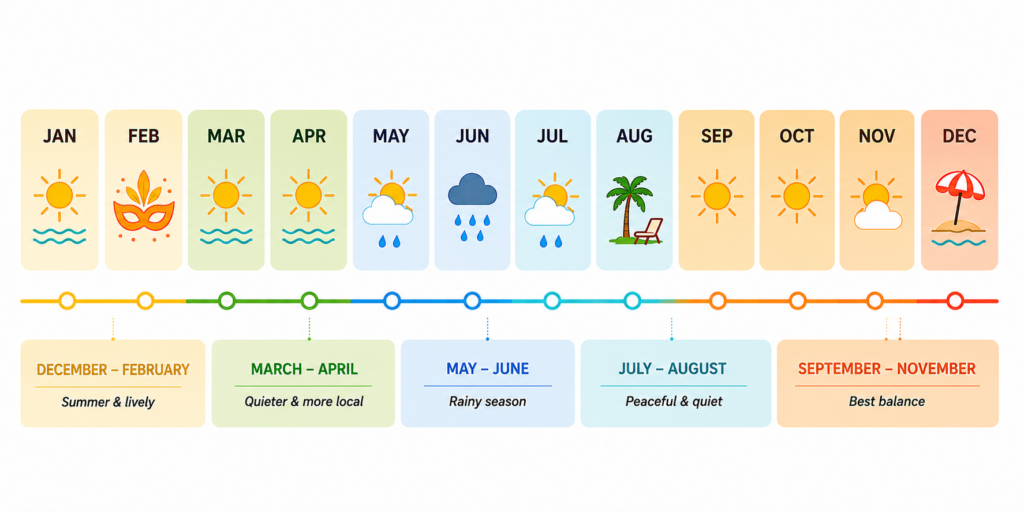
September to November: The Best Balance
September to November is probably the best period for a Portuguese immersion course in Maceió.
The weather is generally warm and becoming drier, while the city is still quieter than during the Christmas and summer holidays. You can combine Portuguese classes with beach days, outdoor activities and exploring Maceió and Alagoas.
For many students, this offers the best balance between good weather, everyday Brazilian life and opportunities to practise Portuguese.
Pros
- Generally good weather
- Great for beaches and outdoor activities
- Good balance between studying and enjoying Maceió
- Less crowded than the high season
Cons
- Some unpredictable weather is still possible
- Less lively than the summer holiday period
December to February: Summer and Brazilian Holiday Atmosphere
If you want to experience Maceió at its liveliest, choose December to February.
It is the Brazilian summer and holiday season, so beaches, restaurants and tourist areas are much busier. January is particularly lively, while February can be a great time to experience the atmosphere around Carnival.
It is a fun period for students who want to combine Portuguese lessons with a very social Brazilian experience.
Pros
- Summer weather (31-32C°)
- Great beach atmosphere
- Lively social life
- Lots of opportunities to experience Brazilian culture
Cons
- Higher prices
- More tourists and crowded beaches
- Accommodation can be harder to find. Also our guest house gets fully booked quickly. So reserve you place in advance
- Hot and humid weather can be uncomfortable if you are sensitive to heat
March, April and May: Quieter and More Local
After summer and Carnival, Maceió becomes much quieter.
March, April and May can be excellent months for students who want to experience everyday life without the high-season crowds.
This period can be a good compromise between studying, exploring and experiencing local life.
Pros
- Good for focusing on Portuguese
- Fewer tourists
- More everyday local atmosphere
- Often better value than the high season
End of May and June: The Rainy Season
June is the wettest month in Maceió.
You can still have sunny days, but if your dream is spending every afternoon on the beach, this isn’t the best period.
For students whose main priority is Portuguese, however, the quieter season can work well. You can focus on your classes and experience a more ordinary side of Maceió.
Pros
- Quiet period for studying
- Few tourists
- Potentially lower prices
- More authentic everyday atmosphere
Cons
- Rainy season
July and August: Peaceful but Quiet
July and August are not lively months in Maceió. The city is much quieter than during the Brazilian summer.
This can be an advantage if you want to concentrate on Portuguese and enjoy a peaceful routine. But if you are looking for a busy beach scene and lots of holiday activity, choose another period.
Pros
- Peaceful environment for studying
- Few tourists
- Quiet everyday atmosphere
- Potentially better prices
Cons
- Maceió can feel very quiet
- Rain is still possible
- Beach weather is less reliable
So, When Should You Come?
For the best combination of Portuguese immersion, good weather and enjoyable beach time, we recommend September to November.
For summer, social life and a lively Brazilian atmosphere, choose December to February.
If your main goal is studying Portuguese in a quiet environment, July and August can work well — as long as you don’t mind a quieter city.
And if you come during the rainy season, don’t worry: learning Portuguese doesn’t stop when it rains. In fact, some of the best language immersion happens away from the beach — in cafés, markets, restaurants and everyday conversations with Brazilians.
Come to Maceió to learn Portuguese — and experience Brazil beyond the classroom.